Buy Malagasy Rice: A Quality Guide for Homes and Traders
How to buy Malagasy rice of real quality: broken grains, whiteness, moisture, labels, local vs imported rice, storage, and finding a Madagascar rice supplier.
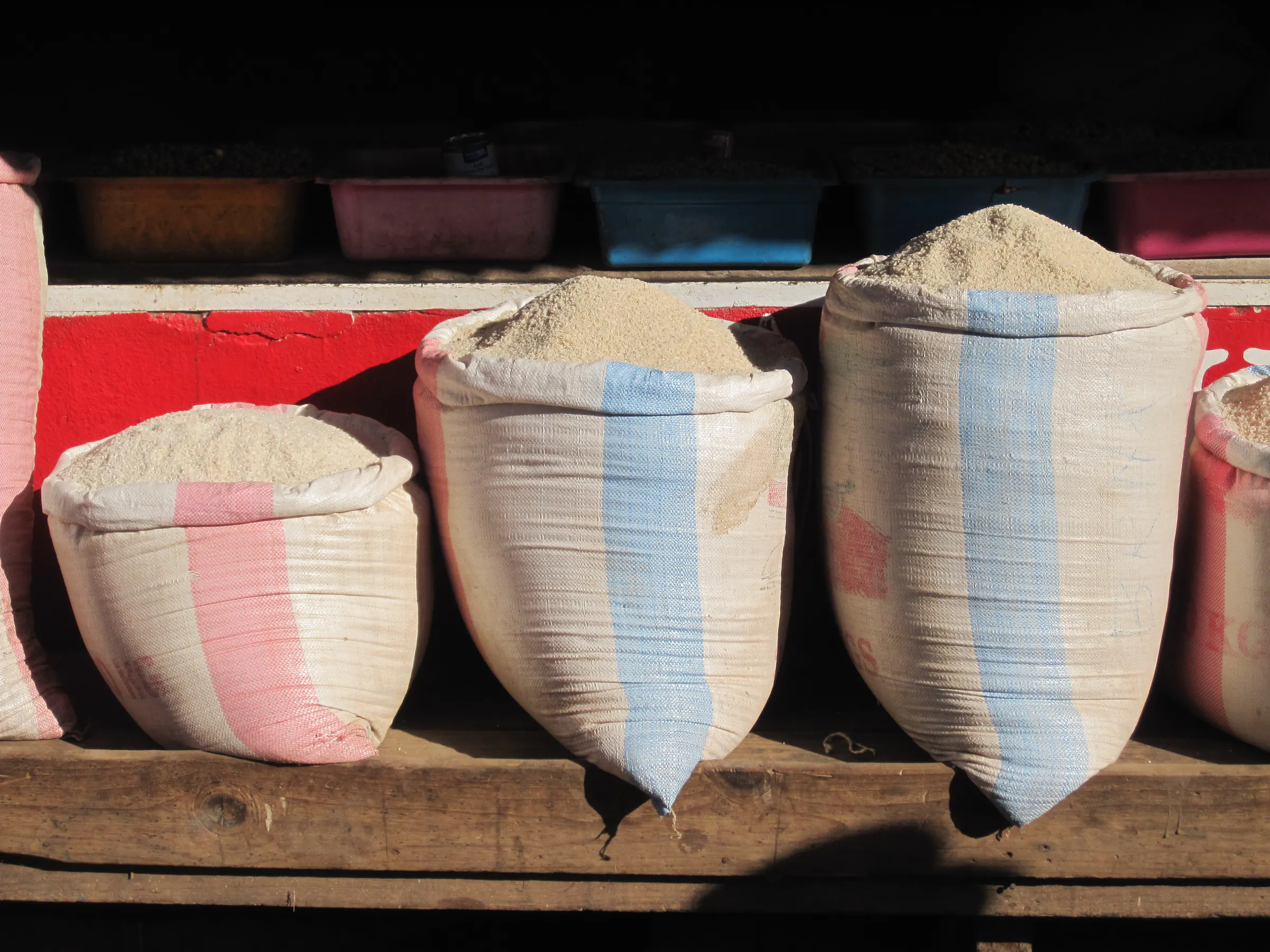
In Madagascar, rice is not just one food among many: it is the centre of almost every meal, morning, noon and night. Yet between loose rice scooped by the kapoaka at the market, imported sacks stacked in depots and branded local rice, it is not always easy to know what you are paying for. For a household that wants to eat well, a grocery that wants loyal customers or a wholesaler looking for a reliable Madagascar rice supplier, here are the practical checks to buy Malagasy rice of real quality.
How to judge rice quality
Grain professionals rely on a few simple indicators, set out in the FAO/WHO Codex Standard for Rice (CXS 198-1995) and in IRRI’s rice quality assessment kit manual. Most of them can be checked by eye with a handful of grain on a white plate.
Broken grains
Broken kernels are pieces of grain cracked during drying, milling or transport. The Codex standard separates whole kernels from large, medium and small brokens according to their length. Broken rice is not unsafe, but it cooks unevenly: the small pieces turn mushy while whole grains are still firm.
The broken-grain rate is also a marker of grade. While drafting the 2026 finance law, the Malagasy government considered taxing imported rice with 5% brokens or less as luxury rice. For table rice, look for grains that are mostly whole and of even length.
Whiteness and grain appearance
Well-milled white rice has an even colour. Watch out for yellowed grains (often a sign of poor drying or damp storage), blackened or spotted grains, and chalky kernels, which are opaque, dull white and break easily. How uniform the batch looks matters more than how bright it is.
Foreign matter
Small stones, paddy husks, bits of straw and weed seeds are the classic impurities of poorly sorted rice. The Codex standard caps organic extraneous matter at 0.5% for milled rice and filth of animal origin, such as dead insects, at 0.1%. In practice, good rice should not need sorting on the sahafa (winnowing tray) before cooking.
Smell
Open the bag or bring your nose close to the grain. Fresh rice smells of grain, sometimes with a floral note in aromatic varieties. A musty, stale, damp or chemical smell is a red flag, and it will not cook away.
Moisture
According to IRRI, grain should stay below 14% moisture for storage of a few months and below 13% for longer storage. Above that, mould and insects thrive and flavour suffers. Without a moisture meter, look for grains sticking together, clumps, a cool damp feel, or condensation inside the packaging.
Packing date and labelling
On packaged rice, the bag should tell you:
- the packer’s name and contact details;
- the origin (country, region) and variety;
- the net weight;
- the packing date or best-before date, ideally with a lot number;
- an EAN-13 barcode (GTIN).
The GTIN is a unique product identifier issued through the GS1 system. Shops scan it at the till and use it to track stock. Note that its first digits show which national GS1 office registered the code, not where the rice was grown. The written statement of origin is what counts.
Local vs imported rice: understanding the Malagasy market
Madagascar grows most of its own rice, but not enough to meet all demand, so it imports every year, mainly from Asia. In the first half of 2024, Pakistan was the leading supplier, ahead of other Asian countries including India.
Volumes swing sharply. According to Malagasy press reports, imports jumped from about 262,000 tonnes in 2024 to more than 800,000 tonnes in 2025. In response, the national trade remedies authority (ANMCC) opened a safeguard investigation in late August 2026, notified to the WTO, while the government temporarily suspended new taxes on high-end imported rice to keep the market supplied.
For buyers, this means volatile prices. The FAO GIEWS country brief notes that rice prices usually climb during the lean season before the main harvest, then ease once new paddy reaches the markets. Weather shocks, input costs and import policy add to the swings. That is why we publish no prices here: any figure would be out of date quickly.
Imported rice is often cheap and plentiful. Local rice from Madagascar, especially Makalioka rice from the Lake Alaotra region, has other strengths: a taste and aroma many families prefer, long grains that hold their shape, and a supply chain that supports Malagasy rice farmers. Learn more in our guides to Makalioka rice and Lake Alaotra, Madagascar’s rice granary.
Why choose packaged, branded rice
Loose rice lets you buy small amounts. A sealed, labelled bag offers three guarantees instead.
Traceability. A brand, a named packer, a written origin and a barcode mean you know who to call if a batch is faulty. For retailers it is also easier to list and manage in stock.
Cleanliness. Sorted, packed rice has not been exposed to dust, repeated handling or blending. Loose rice can mix batches of different origins and grades without the buyer knowing.
Consistency. Customers find the same rice from one bag to the next, which matters as much to a shop or a hotely as the quality of the first purchase.
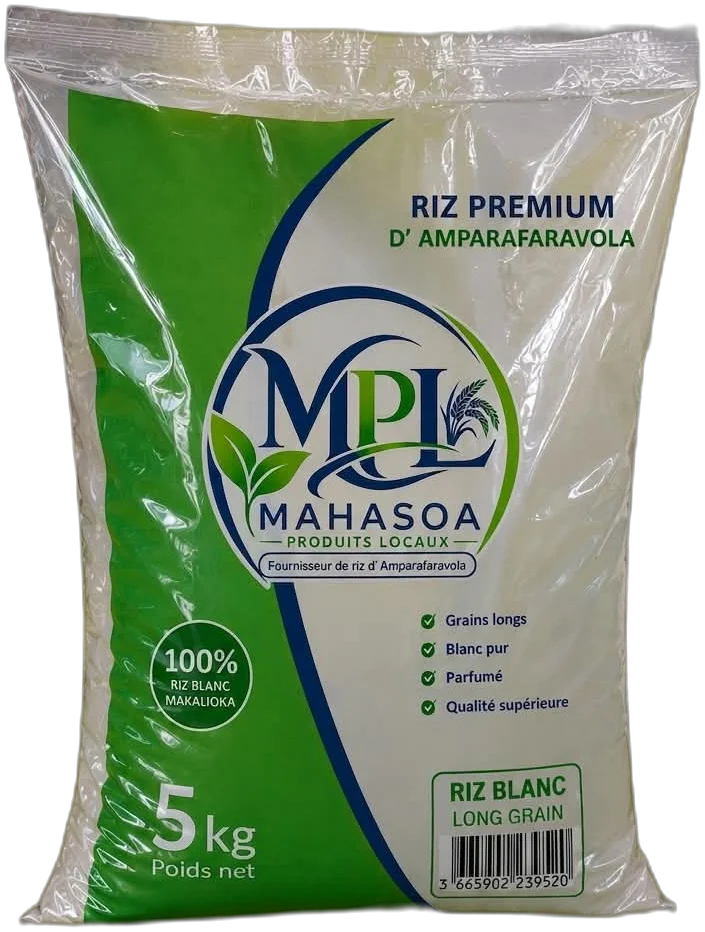
That is the approach behind MAHASOA PRODUITS LOCAUX’s Makalioka Premium white rice, 5 kg: 100% Makalioka rice from Amparafaravola in the Alaotra-Mangoro region, with long grains, pure white and fragrant, carefully selected and packed to deliver a clean product. The bag carries GTIN 3665902239520, and the 5 kg size suits both a family kitchen and a shop shelf.
Storing rice at home or in the warehouse
Good rice can still spoil if it is stored badly. IRRI’s grain storage guidance applies to households and wholesalers alike:
- Keep it dry: never on the floor. Stack bags on pallets or boards, away from walls.
- Keep it cool and shaded: heat speeds up ageing and insect breeding.
- Keep it airtight: once a bag is open, move the rice to a sealed bucket or drum against weevils, rodents and odours.
- First in, first out: in a depot, sell older stock first and log delivery dates.
- Keep it apart: rice absorbs smells, so store it away from soap, kerosene and spices.
Once you have chosen your rice, see our guide on how to cook Malagasy rice.
Retailers and wholesalers: sourcing Makalioka Premium
Do you run a grocery, a neighbourhood shop, a hotely or a wholesale business and need a Madagascar rice supplier for quality local rice? MAHASOA PRODUITS LOCAUX supplies Makalioka Premium white rice in 5 kg bags.
- Call or message on WhatsApp: +261 38 51 783 94.
- Describe your business, your location and the volumes you have in mind.
- Terms, availability and delivery or pick-up arrangements are agreed directly with the team.
Households are welcome to get in touch too with any question about the product.
Checklist: buying Malagasy rice with confidence
- Mostly whole grains of even size, few brokens
- Uniform colour, few yellowed, blackened or chalky grains
- No stones, husks, straw or insects
- Fresh smell, nothing musty or stale
- Dry grains that do not stick, no condensation in the bag
- Bag intact, well sealed, no holes
- Origin, variety, net weight and packer clearly stated
- Readable packing date or lot number
- EAN-13 barcode present (essential for supermarkets)
- Dry, cool, raised storage away from strong smells
Find everything about our rice on the home page and the product section, or contact us to order or become a reseller.
Frequently asked questions
How can I tell if Malagasy rice is good quality?
Spread a handful on a white plate. Good rice is mostly whole grains of even size, uniform in colour, with no yellowed, chalky or spotted kernels. It should smell fresh, never musty, and contain no stones, husks or insects. On a packaged bag, also check the packer's name, the origin, the net weight and the packing date.
What is a good broken-grain percentage for white rice?
There is no single official threshold in Madagascar, but fewer broken grains means a higher grade. During the 2026 budget debate, the government targeted imported rice with 5% broken grains or less as "luxury rice". For everyday eating, rice that is mostly whole grains cooks more evenly.
Is local rice better than imported rice in Madagascar?
They are different products. Imported rice, mostly from Asia, is often cheap and standardised. Local rice such as Makalioka from Lake Alaotra is prized for its flavour, aroma and texture. What matters most is the quality of the batch you buy: sorting, cleanliness, moisture and freshness.
How can a retailer order Makalioka Premium 5 kg rice?
Shops, resellers and wholesalers can contact MAHASOA PRODUITS LOCAUX directly by phone or WhatsApp on +261 38 51 783 94. Quantities, terms and delivery arrangements are agreed case by case during that conversation. Households can use the same number for any question about the product or where to find it.