Malagasy Rice: The Place of Rice in Madagascar Culture
Malagasy rice explained: vary sy laoka meals, ranovola, rice proverbs, famadihana feasts, the history of Imerina rice fields and a vary gasy glossary.
In Madagascar, a meal without rice barely counts as a meal. Rice, vary in Malagasy, is not a side dish: it is the food itself. It shapes the daily routine, the highland landscape, the farming calendar, family celebrations and a good part of the language. To understand Malagasy rice is to understand something central about the island.
Vary gasy: food and identity
The numbers speak for themselves. According to FAOSTAT food balance data (2022 estimate), cited in an IMF paper on Madagascar’s rice sector, the average Malagasy person eats 153.5 kg of rice a year, about 420 g a day, and rice provides more than half of daily calorie intake. The same paper notes that national output reached 4.6 million tonnes in 2022, still not enough to keep up with a fast-growing population.
The language reflects this. In everyday Malagasy, “to have a meal” is mihinam-bary, literally “to eat rice” (Wikipedia, Malagasy cuisine). People also speak of vary gasy, locally grown “Malagasy rice,” as opposed to imported rice, a distinction of taste and of pride.
Rice three times a day
In many households, rice is eaten morning, noon and night. Breakfast is often vary sosoa, rice cooked in plenty of water until soft and porridge-like, also the classic food for the sick. Another favourite is vary amin’anana, rice simmered with chopped greens and sometimes a little meat. At lunch and dinner comes vary maina, dry, separate grains served in generous portions.
Vary sy laoka: how a Malagasy meal is built
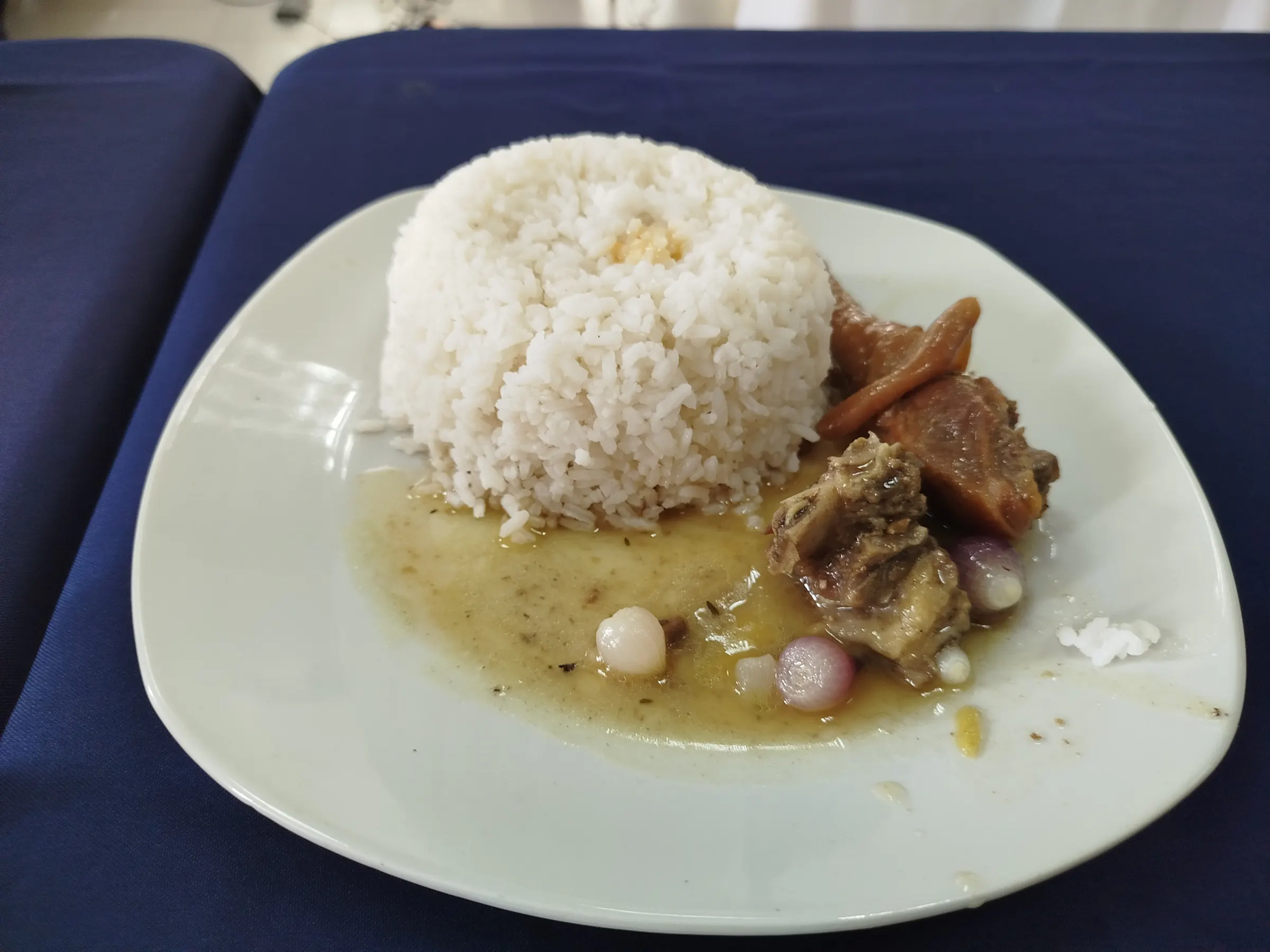
The Malagasy meal follows a simple rule: vary sy laoka, “rice and side dish.” Rice fills most of the plate; the laoka flavours it. Laoka might be romazava (a broth of greens and meat), ravitoto (pounded cassava leaves with pork), chicken (akoho) with ginger, fish, beans, or just boiled greens when money is short. A dab of sakay, chili paste, is common.
This reverses the European habit: rice does not accompany the meat, the meat accompanies the rice. In modest homes the laoka may shrink to almost nothing, but the rice stays. For the traditional cooking method, see our guide on how to cook Malagasy rice.
Ranovola: the drink from the bottom of the pot
Nothing is wasted. After cooking, a thin golden crust sticks to the pot. Hot water is poured over it and simmered to make ranovola (or ranon’apango, from apango, the crust), an amber drink with a light toasted flavour, served warm with or after the meal. Many Malagasy living abroad name it among the tastes they miss most.
The kapoaka: a measure for everyday life
In markets, rice is often sold by the kapoaka, an empty sweetened condensed milk tin of about 300 ml used as a measuring cup. According to Studio Sifaka, about 3.5 kapoaka make a kilo, and half a kapoaka per person is a typical portion for one meal. A legacy of the colonial era, when canned goods reached the island, the kapoaka lets families living day to day buy only what they need. The price of rice “per kapoaka” is still closely watched by the press and government.
Malagasy proverbs about rice
Rice runs through the ohabolana, Malagasy proverbs, collected by the thousands. A few documented examples:
- “Ny alahelo toy ny vary an-tsompitra: ahafahana iray fatambary isan’andro dia levona ihany ny farany.” “Sorrow is like rice in the attic: you take a little each day, and in the end it is all gone.” (Global Literature in Libraries Initiative)
- “Vely vary ifandimbiasana, toto vary ifandrombonana.” “We take turns threshing rice, and pound it all together.” The saying praises mutual aid, fihavanana, at the heart of rice farming (Studio Sifaka).
- “Be faniry, kely fila; ny vary aloha tsy ataon’ny kamo.” “Many wishes, little effort: early rice is not grown by the lazy.” (ohabolana.org)
There is also the famous line attributed to King Andrianampoinimerina: “Ny ranomasina no valam-parihako,” “the sea is the border of my rice field” (Wikipedia). To express his ambition of uniting the whole island, the king reached for the image of a paddy dike, a telling sign of how closely rice and power were linked.
Rice in rituals and celebrations
Famadihana and vary be menaka
The famadihana, or “turning of the bones,” is a highland ceremony in which families bring their ancestors’ remains out of the family tomb, rewrap them in new shrouds and dance with them before returning them. It usually takes place every five to seven years (Wikipedia). The feast is inseparable from vary be menaka, “rice with lots of fat”: rice served with large, fatty pieces of pork or beef. Feeding dozens or hundreds of relatives this way honours the living and the dead alike.
Santa-bary: the first fruits
In Imerina, santa-bary was the offering of the first sheaves of the harvest to the sovereign and elders, a way to thank the Creator, strengthen community bonds and affirm the tie between rulers and ruled (Studio Sifaka). Many families still share the first new rice of the season with relatives.
Weddings, circumcisions, homecomings: at nearly every celebration, hospitality is measured in the amount of rice served.
History: from Austronesian rice to the paddies of Imerina
Rice came to Madagascar with the Austronesian seafarers from Island Southeast Asia, the same people who gave Malagasy its language. For decades archaeologists struggled to find physical traces of this origin. In 2016, a team led by Alison Crowther published in PNAS an analysis of more than 2,500 seed remains from 18 sites: Asian rice (Oryza sativa), along with mung bean and cotton, marks the Austronesian presence. Rice dominates the earliest deposits tested at Mahilaka, in northwest Madagascar, around the 10th century.
Irrigated paddies spread across the highlands around 1600, first in Betsileo country, then in Imerina (Wikipedia). The Betsileo terraces that climb the hills around Ambositra and Ambalavao remain the most striking result.
In Imerina, King Andriamasinavalona (c. 1675–1710) had dikes built along the Ikopa River to drain the Betsimitatatra marshes below Antananarivo and turn them into rice fields (Wikipedia). Andrianampoinimerina (c. 1787–1810) expanded this work through fanompoana, labour owed to the sovereign. Historian Gwyn Campbell argues that it allowed two rice crops a year instead of one, producing a regular surplus for the first time (ResearchGate). Rice became the economic and political foundation of the kingdom.
Today the island’s main rice basin lies farther northeast, around Lake Alaotra, known as Madagascar’s rice granary. That is where our Makalioka Premium rice is grown and selected, in Amparafaravola. Read more in our guides to Lake Alaotra, the rice granary and Madagascar rice varieties.
Malagasy rice glossary
| Malagasy | Meaning |
|---|---|
| vary | rice (plant, grain and dish) |
| vary gasy | Malagasy rice, locally grown |
| akotry | paddy rice, unhusked |
| tanimbary | rice field |
| tantsaha | farmer |
| ketsa | rice seedlings for transplanting |
| manetsa | to transplant rice |
| fambolena | farming, cultivation |
| fijinjana | harvest |
| sakafo | meal, food |
| laoka | side dish eaten with rice |
| akoho | chicken, a favourite festive laoka |
| vary maina / vary sosoa | dry rice / soft, porridge-style rice |
| ranovola | drink made from the rice crust |
| kapoaka | condensed milk tin used as a measure |
| mihinam-bary | to have a meal (“to eat rice”) |
Taste vary gasy at home
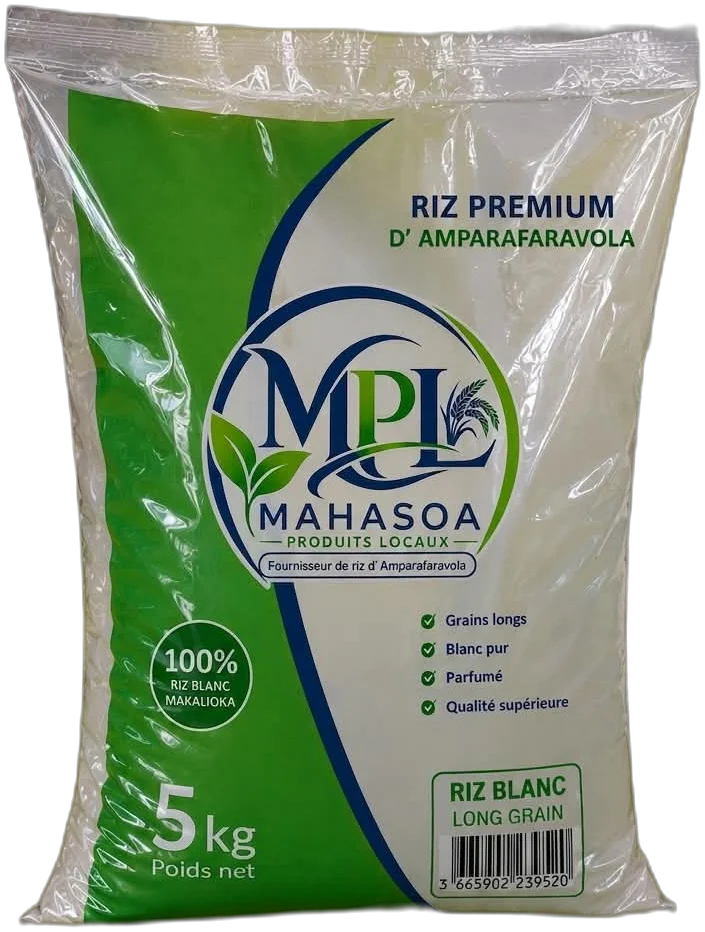
Malagasy rice is above all a matter of taste: a fragrant grain, simply cooked, that carries the laoka. Makalioka Premium white rice from MAHASOA PRODUITS LOCAUX comes from Amparafaravola in the Alaotra-Mangoro region: 100% Makalioka white rice, long grains, pure white and fragrant, packed in 5 kg bags. Learn more in our guide to Makalioka rice, or go back to the home page.
Are you a retailer, grocer or home cook who wants to order? Contact us by phone or WhatsApp at +261 38 51 783 94.
Frequently asked questions
How much rice do Malagasy people eat?
According to FAOSTAT food balance data (2022 estimate, cited by the IMF), the average person in Madagascar eats about 153.5 kg of rice a year, roughly 420 g a day. Rice supplies more than half of daily calorie intake, placing Madagascar among the world's largest per capita rice consumers, behind countries such as Gambia, Bangladesh, Vietnam and Thailand.
What does vary sy laoka mean?
Vary sy laoka means "rice and side dish." It is the basic structure of a Malagasy meal: a large mound of white rice served with a smaller laoka such as romazava (greens and meat broth), ravitoto (pounded cassava leaves with pork), chicken, fish or beans. Rice is the main course; the laoka is there to flavour it.
What is ranovola?
Ranovola, also called ranon'apango, is a drink made by pouring hot water into the rice pot over the lightly toasted crust (apango) left at the bottom after cooking. It is simmered briefly and drunk warm with or after the meal. It has a mild, slightly roasted taste and is often served instead of plain water.
What rice dish is served at a famadihana?
At a famadihana, the highland "turning of the bones" ceremony, families traditionally serve vary be menaka, meaning "rice with lots of fat": rice served with large, fatty pieces of pork or beef. The generous dish reflects the festive, family character of an event that can gather hundreds of relatives.